
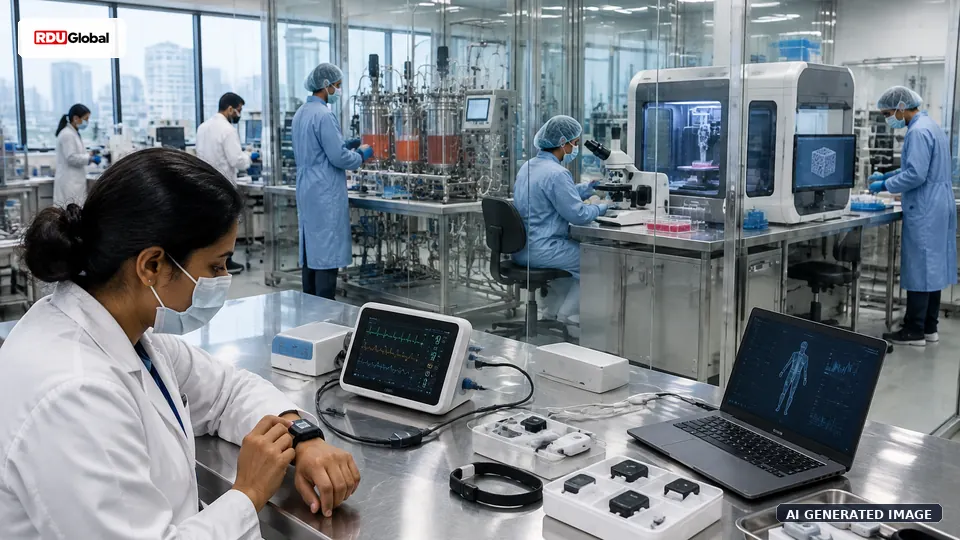
Healthcare is entering a phase in which technology is no longer a supporting tool but a core driver of diagnosis, treatment and capital allocation. What once sounded experimental — sensors embedded in everyday devices, 3D-printed tissue, digitally monitored clinical trials and personalized medicine tailored to a patient's biology — is increasingly moving into commercial pipelines. For markets, IPO candidates and long-term investors, the shift matters because it is broadening the definition of healthcare itself.
Care Goes Digital
The most visible change is the rapid expansion of connected health devices. Wearables and biosensors are now being used to track heart rhythm, glucose levels, sleep quality, oxygen saturation and other indicators in real time. That data is not just useful for consumers; it is becoming valuable to hospitals, insurers and drugmakers seeking earlier intervention and better patient adherence. The result is a healthcare model that is more continuous, less episodic and increasingly data-driven.
This transition has major implications for public and private markets. Companies that can convert raw physiological data into actionable clinical insight are attracting attention from investors looking for scalable platforms rather than one-off products. The commercial logic is straightforward: if a device can reduce hospital visits, improve outcomes or support remote monitoring, it can potentially lower system-wide costs while creating recurring revenue streams.
Trials Under Pressure
Clinical research is also being reshaped. Traditional trials are expensive, slow and often limited by geography and patient recruitment challenges. New digital tools are helping sponsors monitor participants remotely, collect higher-frequency data and widen access to more diverse populations. That can shorten timelines, reduce dropout rates and improve the quality of evidence used in regulatory submissions.
For pharmaceutical companies, this is more than an efficiency play. Faster and more adaptive trials can improve the economics of drug development, which remains one of the riskiest and costliest areas in healthcare. For investors, the appeal lies in the possibility that technology can de-risk parts of the development process and create businesses that serve multiple sponsors rather than a single therapeutic area.
The shift also supports a broader move toward personalized medicine. As genomic data, biomarker analysis and patient-specific monitoring become more integrated into care pathways, treatment is becoming more targeted. That could improve efficacy and reduce adverse effects, but it also raises the bar for data infrastructure, regulatory compliance and interoperability across systems.
The Next Frontier
The frontier technologies drawing the most attention are also the most ambitious. Researchers and startups are advancing work on 3D-printed skin, tissue scaffolds and reconstructed organs, areas that could eventually transform transplant medicine and wound care. While many of these applications remain in development, they signal where the sector is headed: toward repair, replacement and regeneration rather than symptom management alone.
That long-term promise is one reason healthcare technology continues to command premium valuations in selective corners of the market. Investors are not simply betting on devices or software; they are betting on a new operating system for medicine. The opportunity spans diagnostics, therapeutics, manufacturing, logistics and patient engagement, creating a layered ecosystem with multiple entry points.
Still, the path from laboratory breakthrough to commercial scale is rarely linear. Regulatory scrutiny, reimbursement hurdles, data privacy concerns and manufacturing complexity can slow adoption. Not every promising technology will become a profitable business, and not every IPO will justify its valuation. But the direction of travel is clear: healthcare is becoming more precise, more connected and more personalized.
For markets, that means the next cycle of healthcare investing may look very different from the last. The winners are likely to be companies that can combine scientific credibility with software-like scalability, clinical utility and durable demand. In that sense, the sector is not merely adopting technology. It is being rebuilt by it.