
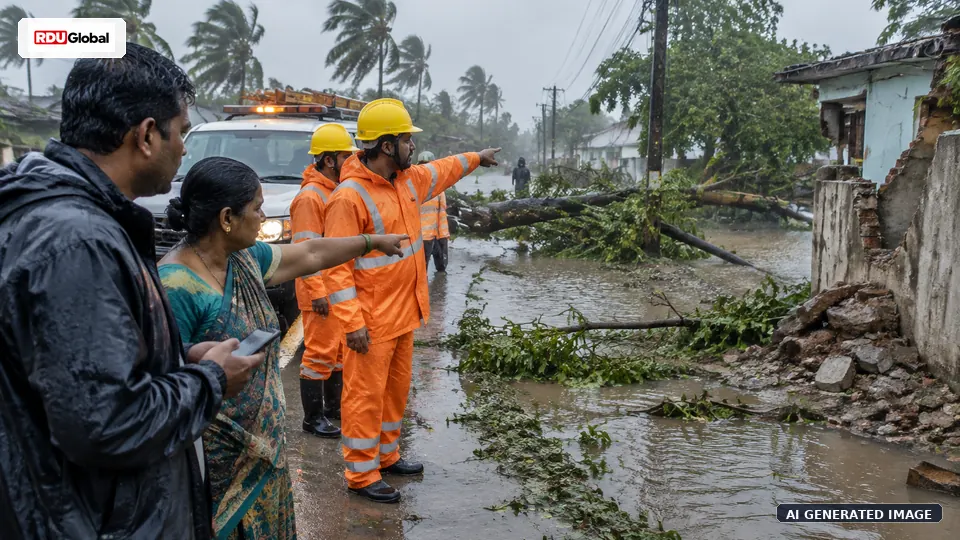
Andhra Pradesh has activated a digital public grievance channel as Cyclone Arnab continues to trigger disruptions across the state, with residents now able to report urgent weather-related problems through the Mana Mitra WhatsApp service. By sending "Hi" to 9552300009, affected people can flag power outages, fallen trees, collapsed walls, waterlogging and other emergency conditions that require rapid attention from local authorities.
The move reflects a broader shift in disaster response toward mobile-first citizen reporting, especially in a state where severe weather events routinely strain municipal systems, power distribution networks and local administration. In the immediate aftermath of a cyclone, the speed at which information reaches responders can determine how quickly roads are cleared, electricity is restored and vulnerable neighbourhoods are made safe. A single WhatsApp number, accessible on widely used smartphones, lowers the barrier to reporting and can help authorities build a more accurate live picture of damage.
Digital Response Channel
The Mana Mitra service is being positioned as a practical emergency interface rather than a general information portal. Residents are being encouraged to use it to report specific hazards linked to the cyclone, including snapped electricity lines, blocked roads, fallen trees and structural damage such as collapsed walls. Waterlogging, another common cyclone impact in low-lying urban and semi-urban areas, can also be reported through the same channel.
For disaster managers, such reports are valuable because they can be mapped, prioritised and routed to the relevant department more quickly than traditional complaint systems. In a fast-moving weather emergency, delays in communication often translate into longer outages, traffic disruption and heightened safety risks. A WhatsApp-based reporting mechanism also allows citizens to send concise location details and, where possible, images or short descriptions that can help verify the severity of the problem.
The use of a familiar messaging platform is significant in a state where digital governance tools have increasingly become part of the administrative response architecture. Rather than relying solely on helplines or physical complaint centres, authorities are leaning on a channel that many households already use daily. That can be especially important during a cyclone, when mobility is restricted, phone networks may be congested and residents may be reluctant to leave shelter to seek assistance.
Why It Matters Now
Cyclone response is not only a matter of emergency relief; it is also a test of administrative coordination, infrastructure resilience and public communication. Power failures can quickly cascade into broader service interruptions, affecting water supply, communications and health facilities. Fallen trees and collapsed walls can block access for ambulances, utility crews and relief teams. Waterlogging can cut off neighbourhoods and create secondary health risks if drainage systems are overwhelmed.
By centralising citizen reports through Mana Mitra, the state is effectively creating a real-time incident intake system that can support faster triage. The approach may also reduce duplication, as multiple residents can report the same incident and authorities can cross-check the location before dispatching crews. In a disaster environment, that kind of data discipline matters because resources are limited and response windows are narrow.
The broader policy implication is clear: digital grievance systems are increasingly becoming part of the disaster management toolkit, not just the administrative convenience toolkit. When used effectively, they can shorten the distance between a citizen's emergency and the government's response. That is particularly relevant in Andhra Pradesh, where coastal exposure makes cyclone preparedness a recurring governance priority.
Residents affected by Cyclone Arnab are therefore being advised to use the WhatsApp service promptly and report only genuine emergencies, with clear details of the issue and location. The effectiveness of the system will depend not only on public participation but also on how quickly the information is translated into field action by electricity, municipal and disaster response teams.
For now, the message from authorities is straightforward: if the cyclone has caused damage in your area, send "Hi" to 9552300009 on WhatsApp and report the emergency through Mana Mitra. In a severe weather event, that simple step may help accelerate the first link in the response chain.